In 2026, businesses are rethinking how their digital platforms are structured. The demand for seamless experiences across websites, mobile apps, wearables, and even smart devices has pushed companies to reconsider traditional architecture models. The debate between headless and traditional web + app architectures is no longer just technical—it is strategic.
For any organization working with an experienced app and web development company in Toronto, understanding the long-term implications of each approach is essential. Architecture decisions influence scalability, user experience, performance, maintenance costs, and innovation potential. Let’s explore how both models compare and what trends are shaping the future.
Understanding Traditional Web + App Architectures
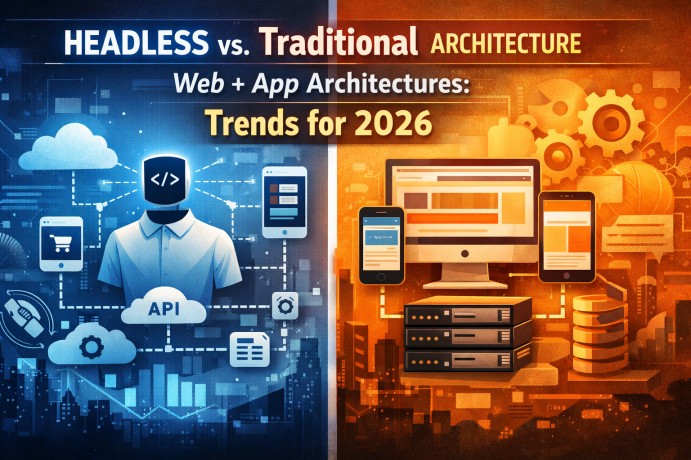
Traditional architecture typically combines the frontend and backend into a tightly connected system. Content management, presentation layers, and business logic are often bundled together. This model has served businesses well for many years because it offers simplicity and predictability.
In a traditional setup, developers build and maintain web and mobile applications with clearly defined, centralized structures. For small to mid-sized businesses, this can be practical and cost-effective. An established app and web development company in Toronto may recommend this approach when project scope is limited and rapid deployment is a priority.
However, as customer expectations grow, limitations can emerge. Updating one channel may require changes to the entire system. Scaling across multiple digital platforms can become time-consuming and complex.
What Is Headless Architecture?
Headless architecture separates the frontend (the “head”) from the backend. Content and functionality are delivered via APIs, allowing businesses to distribute digital experiences across multiple platforms without being restricted to a single presentation layer.
In 2026, headless systems are increasingly popular among enterprises that require omnichannel delivery. Websites, mobile apps, kiosks, and even IoT devices can pull data from the same backend services. A forward-thinking app and web development company in Toronto often implements headless solutions for clients looking to scale quickly and innovate continuously.
This modular structure enables faster frontend experimentation while keeping the backend stable and secure. Businesses gain flexibility without disrupting core operations.
Performance and Scalability in 2026
Performance expectations are higher than ever. Users demand fast-loading applications and responsive interfaces across devices. Headless architecture supports this by enabling optimized frontend frameworks that communicate directly with APIs.
By decoupling systems, developers can scale individual components independently. An experienced app and web development company in Toronto can adjust backend infrastructure without altering the user interface, reducing downtime and improving reliability.
Traditional systems can still perform well, particularly for straightforward applications. However, scaling complex platforms across regions or digital touchpoints often becomes more challenging under tightly coupled architectures.
In competitive markets, speed and adaptability make a measurable difference.
Development Speed and Team Collaboration
One of the defining trends of 2026 is cross-functional collaboration. Designers, frontend developers, backend engineers, and DevOps teams must work together efficiently.
Headless architecture allows frontend and backend teams to operate simultaneously without waiting on one another. This parallel workflow accelerates product development. A modern app and web development company in Toronto frequently adopts this approach to reduce time-to-market for feature-rich platforms.
In contrast, traditional systems may require coordinated updates across layers, slowing development cycles. While simpler to manage initially, they can limit agility when rapid innovation is required.
For growing businesses, development speed directly impacts revenue and competitive positioning.
Content Management and Omnichannel Delivery
Digital experiences are no longer confined to websites. Customers interact with brands through mobile apps, smart devices, social integrations, and emerging platforms.
Headless content management systems excel in omnichannel delivery. Content is created once and distributed anywhere through APIs. An agile app and web development company in Toronto can build systems that push updates across multiple platforms simultaneously.
Traditional CMS platforms, while user-friendly, may restrict how content is presented across different devices. Customization often requires additional development effort.
In 2026, organizations that prioritize consistent messaging across channels increasingly lean toward headless solutions.
Security and Maintenance Considerations
Security remains a central concern for businesses in Canada and globally. Decoupled systems reduce certain vulnerabilities by separating frontend interfaces from backend databases. APIs can be secured independently, limiting exposure.
A knowledgeable app and web development company in Toronto designs headless systems with robust authentication protocols and controlled access layers. However, the increased complexity of distributed systems requires skilled management.
Traditional architectures may be easier to maintain for smaller teams because all components exist within a unified environment. Fewer moving parts can sometimes simplify troubleshooting.
Ultimately, the best choice depends on available expertise and long-term digital strategy.
Cost Implications and Long-Term ROI
Initial costs for headless architecture can be higher due to custom integrations and advanced API development. However, long-term savings often result from flexibility and scalability.
Businesses partnering with a strategic app and web development company in Toronto often evaluate total cost of ownership rather than short-term expenses. Headless systems may reduce redevelopment costs when expanding into new channels.
Traditional systems may offer lower upfront investment, making them suitable for startups or companies testing a new concept. Yet, significant growth can require structural upgrades later, increasing overall expenditure.
Strategic planning ensures that architecture aligns with projected expansion.
Future Trends Influencing Architecture Decisions
Looking ahead in 2026, artificial intelligence integration, real-time personalization, and IoT connectivity are influencing architecture decisions. Headless systems often integrate more seamlessly with AI-driven services and microservices-based ecosystems.
Progressive web applications and hybrid apps also benefit from API-first strategies. A forward-looking app and web development company in Toronto anticipates these needs and designs platforms that evolve with emerging technologies.
Sustainability considerations are also becoming relevant. Efficient, modular systems can reduce server strain and optimize performance, contributing to greener digital operations.
Businesses that anticipate future demands rather than reacting to them will remain competitive.
Making the Right Choice for Your Business
There is no universal answer to the headless versus traditional debate. The right decision depends on company size, growth trajectory, technical resources, and digital ambitions.
Organizations with limited complexity and defined user journeys may find traditional architectures sufficient. Those planning for multi-channel expansion, rapid innovation, and scalable personalization often benefit from headless solutions.
Partner with Knovatek Inc. for Future-Ready Digital Solutions
Choosing between headless and traditional architectures is a strategic investment in your company’s future. Knovatek Inc. brings technical expertise, industry insight, and a forward-thinking mindset to every project.
If you are ready to build a scalable, high-performance digital platform tailored to 2026 and beyond, connect with Knovatek Inc. today. Their team will guide you toward the architecture that best supports your goals and long-term growth.